7 Steps to Take When Your Car Breaks Down

Last Updated: November 21, 2026
Quick Summary
When your car breaks down, first turn on your hazard lights and move to a safe spot away from traffic, then call for a tow. If there is smoke, fire or a fuel smell, get everyone out and away from the car right away. Call 410-929-3521 for an upfront towing quote.
Turn on hazard lights as soon as you realize something is wrong.
Pull over to a wide, flat shoulder or parking area away from traffic.
If there is smoke, fire or a fuel smell, get everyone out and move well away.
Have your location, vehicle details and symptoms ready before calling for a tow.
Call 410-929-3521 for an upfront towing quote.
Stranded in Baltimore County?
Avery Towing & Recovery, LLC offers 24/7 local towing and roadside help near Halethorpe, Maryland.
Table of Contents
What to Do Right Away When Your Car Breaks Down
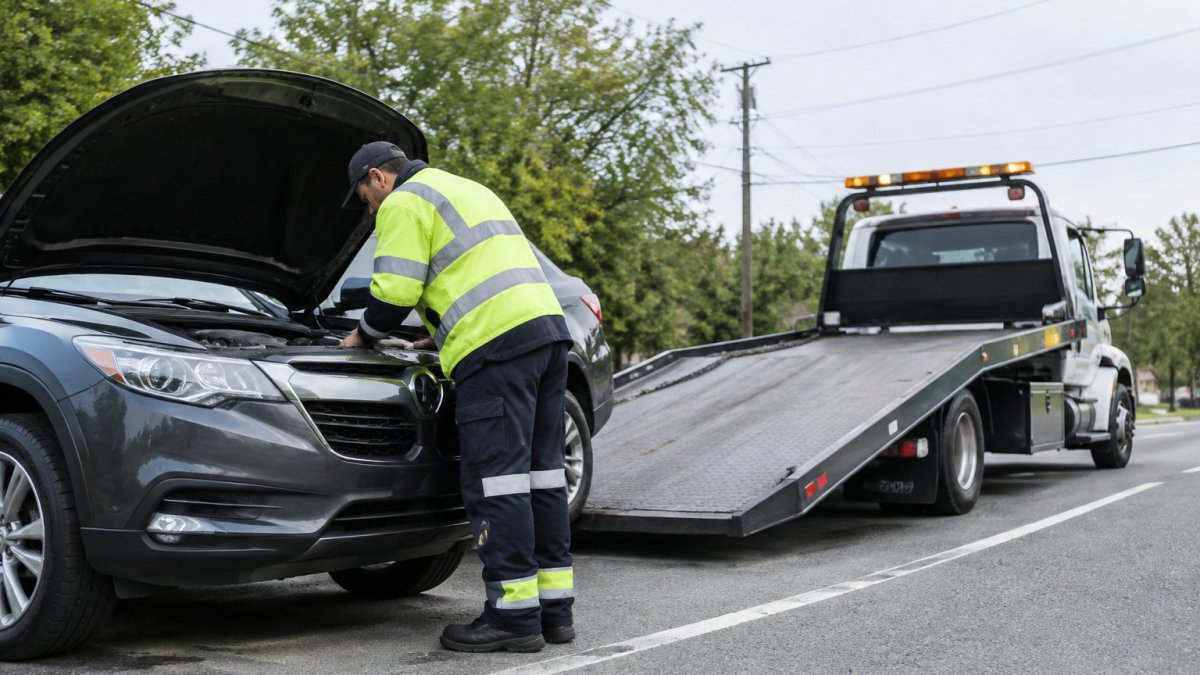
When your car breaks down, the first few minutes matter most. Avery Towing & Recovery, LLC helps drivers in Halethorpe, Arbutus, Catonsville and nearby Baltimore areas every day, and the steps below will keep you safer until help arrives.
The steps below cover what to do in order. Follow them one at a time and you will be in a much safer spot before the tow truck gets there.
Step 1: Stay Calm and Assess Where You Are
A breakdown is stressful, but panic leads to mistakes like swerving or stopping in the wrong place. Take a breath and look around before you touch anything.
Check the following:
Are you on a busy highway, a curve or a hill?
Is the car still moving, or has it stopped in a live lane?
Do you see smoke, a burning smell or a warning light?
Who is in the car with you, including children and pets?
If there is smoke or fire, get everyone out and away from the car right away. Otherwise, your next job is to move the car safely. Knowing where you are also helps when you call for a tow, so note the nearest exit, cross street or mile marker.
Step 2: Get the Car to a Safe Spot and Turn On Hazard Lights
Turn on your hazard lights as soon as you realize something is wrong. They tell other drivers to slow down and give way. Then ease the car toward the right side of the road.

Pull over to a shoulder or safe location
Aim for a wide, flat shoulder or a parking area away from traffic. Avoid stopping on a curve, a hill crest or the median, where other drivers may not see you in time. Signal before you move over, and keep your speed low.
Engage the parking brake and make the vehicle visible
Once you stop, set the parking brake and put the car in park. Then make sure other drivers can see you. Set up a warning triangle or flares if you have them, placed well behind the car. Wear a reflective vest if you have one before you step out.
Should You Stay Inside or Get Out? A Decision Guide
Most breakdown advice says either "stay in the car" or "get out and stand behind the barrier," but the right answer depends on where you stopped. Use the scenarios below to decide quickly. When in doubt on a fast road, staying buckled inside with your hazards on is the safer default.
My Stepdad
Scenario 1: Fast highway, traffic close by, no fire or smoke
Stay inside with your seat belt fastened. A disabled car is far more visible to oncoming traffic than a person standing on the shoulder, and the vehicle's frame absorbs an impact that a pedestrian cannot. Keep children buckled in their seats and keep pets secured. Do not open a door into the traffic lane to wave someone down.
Scenario 2: Smoke, fire or a strong fuel smell
Get everyone out immediately and move well away from the car, ideally upwind and behind a barrier if one exists. Do not open the hood to inspect a fire, and do not restart the engine to "see if it clears." A fuel smell after a breakdown can mean a leak near hot exhaust components, so treat it as an evacuation trigger, not a diagnostic clue.
Scenario 3: Narrow shoulder, blind curve or hill crest
If your car is stopped where oncoming drivers cannot see it in time, the car itself is a hazard. Get out on the side away from traffic, move to a safe distance behind a guardrail or up a slope if you can, and keep your hazards on. Do not stand between your car and the travel lane, and do not try to push the vehicle by hand on a live road.
Scenario 4: Wide shoulder or parking area with a barrier
If you have room and a physical barrier between you and traffic, exiting and standing behind the barrier is reasonable, especially if you need to set out warning triangles or check for a flat tire on the safe side. Keep your reflective vest on and stay behind the barrier, not beside the car.
Scenario 5: Tunnel, bridge or isolated stretch
A common pattern is that drivers exit to inspect damage and then stand in the traffic lane without realizing it.
Watch out: Do not stand behind your car to flag traffic on a highway, a rear-end collision pushes the vehicle toward you. Signal with hazards and let the tow operator handle positioning.
If you are unsure whether your location is safe, call 410-929-3521 for an upfront towing quote and describe where you are stopped; the operator can tell you what to expect and help you decide whether to stay put.
My Car Broke Down, Who Do I Call?
Call a local towing company that can reach your location and move your vehicle correctly. Many drivers first check roadside assistance through their insurer, auto club or vehicle warranty, then call a local tow company when that help is unavailable or the wait is too long. If you are on a live lane, in a tunnel or see smoke or fire, call 911 first, then call for a tow.
The dispatcher checklist
Have these details ready before you dial so the call is short and the right equipment is sent:
Location: the road name, direction of travel, nearest exit, cross street or mile marker, and any landmark such as a shopping center or overpass. If you can share a map pin from your phone, do so.
Vehicle: year, make, model, color and license plate, plus whether it is all-wheel drive, lowered or has aftermarket wheels.
Symptom: flat tire, dead battery, overheating, no-start, warning light, smoke, fuel smell or a collision. Say whether the car still rolls, steers and brakes.
Passengers: how many people are with you, including children and pets, and whether anyone is injured.
Insurer roadside help versus a local tow
Roadside assistance through an insurer or auto club often covers a jump start, lockout, tire change or a tow to a participating shop, but the provider may route your call to a contracted operator and the wait can stretch. A local tow company is a direct call, so you can describe the vehicle and location once and confirm what service you need.
What to confirm before the truck arrives
Ask for the company name, the type of truck being sent and an upfront quote for the service you need.
Watch out: Be cautious of unsolicited tow operators who arrive without being called and pressure you to sign a tow authorization.
Avery Towing & Recovery, LLC handles emergency towing, flatbed towing, jump starts, tire changes, lockout help and winch recovery for private drivers in Halethorpe, Arbutus, Catonsville, Elkridge, Jessup, Glen Burnie and nearby Baltimore communities.
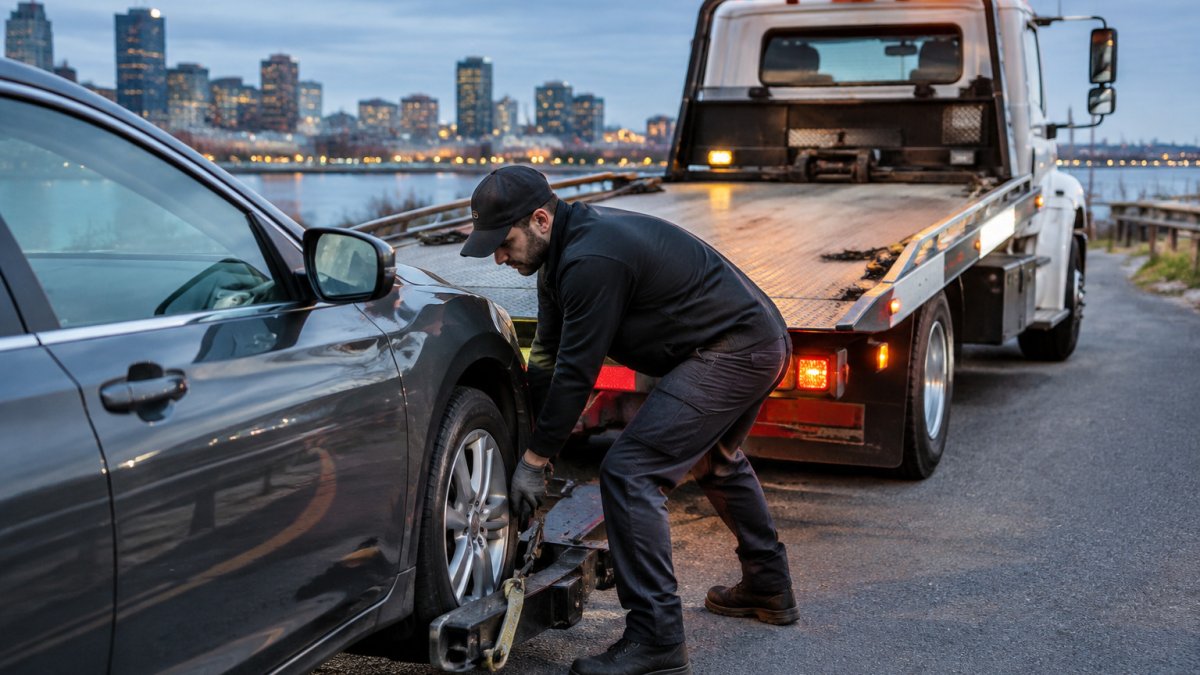
When Your Car Breaks Down at Night or on the Highway
A breakdown after dark or on a highway raises the risk. If you are wondering whether a tow truck can come out late at night in Maryland, this guide explains what to expect.
Keep these items in your car:
A flashlight with fresh batteries
Reflective triangles or flares
A reflective vest
A phone charger or power bank
Water and a few snacks
If you break down at night, stay visible and keep your hazards on. If you are on a highway, stay in the car with your seat belt on unless you see a clear reason to get out.
Who to Call When Your Car Breaks Down on the Highway
On a highway, speed matters, and the right tow truck makes a difference. Some vehicles, such as all-wheel-drive cars, can be damaged if towed the wrong way, so tell the company what you drive.
Here is a quick guide:
Problem | Likely Tow Type | What to Tell the Dispatcher |
Flat tire or dead battery | Tire change or jump start | Vehicle type, location |
Engine or mechanical failure | Standard tow or flatbed | Make, model, symptoms |
All-wheel-drive vehicle | Flatbed recommended | AWD, make, model |
Locked out of car | Lockout service | Location, vehicle type |
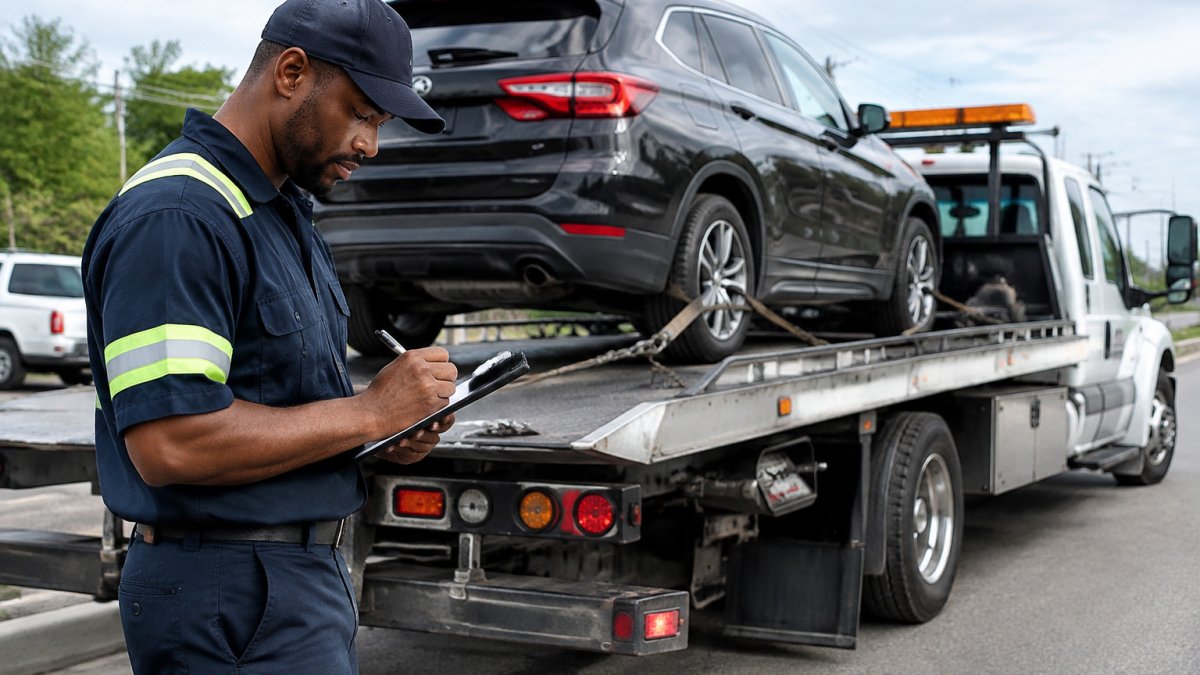
If the car cannot roll, or you are unsure how it should be moved, ask for a flatbed. Ask the company to confirm the price before the truck arrives.
Booking Your Tow: Call 410-929-3521 for an Upfront Towing Quote
When you are ready to book, call Avery Towing & Recovery, LLC at 410-929-3521 and ask for an upfront towing quote. You can also tap to call now: tel:4109293521.
Avery Towing & Recovery, LLC provides 24/7 emergency towing, local flatbed and rollback towing, jump starts, tire changes, lockout help and winch recovery for private drivers in Halethorpe, Arbutus, Catonsville, Elkridge, Jessup, Glen Burnie and nearby Baltimore communities. Towing trips are handled within Maryland only, so both pickup and drop-off must be in the state.
When you call, share your location, your vehicle details and what happened. That helps the team give you a clear quote and send the right equipment. If you are near Halethorpe, check local availability and request an emergency tow or flatbed.
Frequently Asked Questions
What should I do first if my car breaks down?
First, stay calm and check your surroundings. Turn on your hazard lights, and if you can, steer the car onto the shoulder or another safe spot away from moving traffic. Set the parking brake, keep your seat belt on, and make sure the car is visible to other drivers. Once you are stopped safely, decide whether to stay inside or exit, then call for towing or roadside help. Avery Towing & Recovery LLC can be reached at 410-929-3521 for an upfront towing quote.
My car broke down, who do I call in Maryland?
Call a local towing and roadside assistance company that serves your area. For drivers in Halethorpe, Arbutus, Catonsville, Elkridge, Jessup, Glen Burnie and nearby Baltimore communities, Avery Towing & Recovery LLC offers emergency towing, flatbed towing, jump starts, tire changes, and lockout help. Have your exact location, your vehicle details and a description of the problem ready before you call. Calling 410-929-3521 gets you an upfront towing quote.
What should I do if my car breaks down on the highway at night?
Get as far onto the shoulder as you safely can, turn on your hazard lights, and stay inside with your seat belt fastened if the shoulder is narrow or traffic is fast. Use your phone to call for help and tell the dispatcher your location, the direction you are traveling, and the nearest exit or landmark. Avoid standing between your car and passing traffic. Maryland towing services can respond to Baltimore area highways, and you can call 410-929-3521 for an upfront quote.
Should I stay in my car if it breaks down?
In most cases, staying inside the vehicle with your seat belt fastened is safer than standing near moving traffic, especially on a highway or in poor weather. Exit only if the car is smoking, there is a fire risk, or you are in a location where staying inside puts you in greater danger. If you do get out, move away from the roadway and behind a guardrail if possible. Call for towing once you are safely positioned, and call 410-929-3521 for an upfront towing quote.
Comments